Thank you for writing to us. One of our executive will reach back to you through your submitted medium. In case there’s an urgency, feel free to connect over WhatsApp for faster response.
Prefer calling? Dial +918042783904 (International callers) or 08042783904 (Indian callers).
Enclomiphene (also known as Enclomiphene citrate) is a selective estrogen receptor modulator (SERM) widely used for:Boosting natural testosterone in men (off‑label use) Supporting male fertility and sperm count Post‑cycle therapy (PCT) after steroid cycles Treating ovulation issues in women (under medical supervision)
Testosterone capsules (like Jatenzo® and Tlando®) are used to treat low testosterone levels in men due to conditions such as primary or secondary hypogonadism ���. They help raise blood testosterone into the normal range and may improve symptoms like low sex drive, erectile dysfunction, fatigue, reduced muscle mass, and mood changes
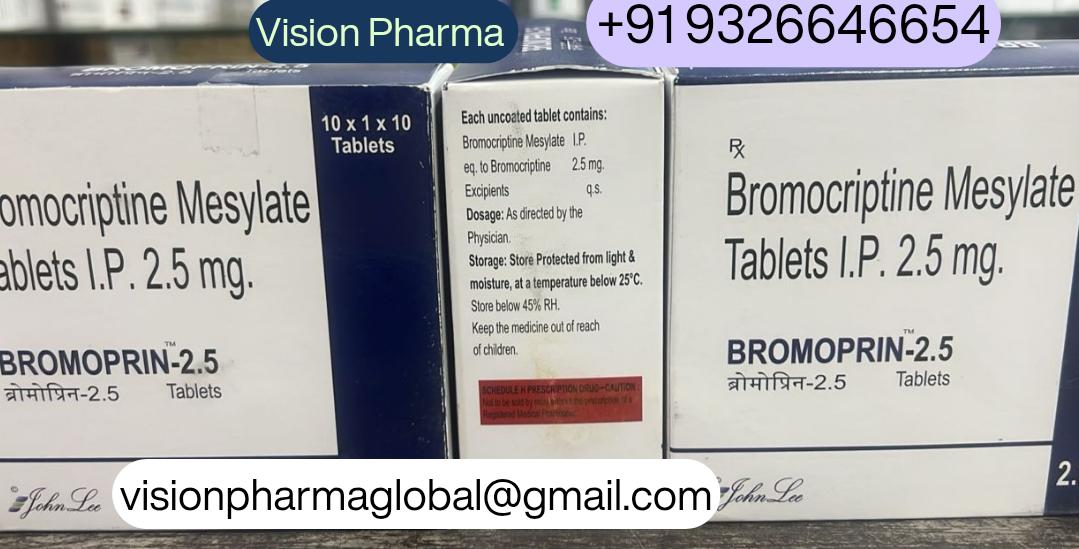
Bromocriptine is a dopamine agonist used mainly to treat certain hormone disorders, Parkinson’s disease, and type 2 diabetes .Main approved uses1. High prolactin (hyperprolactinemia) and related problems
Bromocriptine lowers prolactin hormone levels and is used for conditions caused by excess prolactin, such as:Infertility (difficulty getting pregnant) in women and men Absence of periods (amenorrhea) or irregular periods Milky discharge from breasts when not pregnant or breastfeeding (galactorrhea) Pituitary prolactinomas (benign tumors of the pituitary gland that secrete prolactin) 2. Acromegaly
It is used to treat acromegaly, a condition where the body makes too much growth hormone, causing abnormal growth of bones and tissues (hands, feet, face) Bromocriptine reduces growth hormone levels, though it is often not the first choice today .3. Parkinson’s disease
Bromocriptine is used to treat symptoms of Parkinson’s disease, such as tremors, stiffness, and slow movements . It works by stimulating dopamine receptors in the brain and is often used along with levodopa
Clomiphene tablets (clomiphene citrate) are mainly used to treat female infertility due to lack of ovulation (anovulation), such as in polycystic ovary syndrome (PCOS), by stimulating the ovaries to release an egg. Main medical useClomiphene is prescribed to women who do not ovulate regularly or at all, making it harder to get pregnant. It is commonly used in conditions like PCOS, post‑pill amenorrhea, and some cases of secondary amenorrhea It works by blocking estrogen receptors in the brain, which tricks the body into producing more follicle‑stimulating hormone (FSH) and luteinizing hormone (LH), leading to follicle growth and ovulation
Clomiphene tablets (clomiphene citrate) are mainly used to treat female infertility due to lack of ovulation (anovulation), such as in polycystic ovary syndrome (PCOS), by stimulating the ovaries to release an egg. Main medical useClomiphene is prescribed to women who do not ovulate regularly or at all, making it harder to get pregnant. It is commonly used in conditions like PCOS, post‑pill amenorrhea, and some cases of secondary amenorrhea It works by blocking estrogen receptors in the brain, which tricks the body into producing more follicle‑stimulating hormone (FSH) and luteinizing hormone (LH), leading to follicle growth and ovulation
Tamoxifen tablets are mainly used to treat and prevent hormone receptor–positive breast cancer, and they are also sometimes used off‑label for infertility and other conditions Main Uses of TamoxifenBreast cancer treatment: Tamoxifen is used in both early and advanced (metastatic) hormone receptor–positive breast cancer in women and men . It works by blocking estrogen’s effect on breast tissue, which slows or stops the growth of cancer cells After surgery (adjuvant therapy): After surgery and/or radiation for early breast cancer, tamoxifen is usually taken for 5 to 10 years to reduce the risk of cancer coming back.Ductal carcinoma in situ (DCIS): For women with DCIS (a non‑invasive breast condition), tamoxifen is taken for 5 years after surgery and radiation to lower the chance of developing invasive breast cancer Reducing breast cancer risk: In women at high risk of breast cancer (due to family history, genes, etc.), tamoxifen can be taken for 5 years to lower the risk of developing invasive breast cancer
Tamoxifen tablets are mainly used to treat and prevent hormone receptor–positive breast cancer, and they are also sometimes used off‑label for infertility and other conditions Main Uses of TamoxifenBreast cancer treatment: Tamoxifen is used in both early and advanced (metastatic) hormone receptor–positive breast cancer in women and men . It works by blocking estrogen’s effect on breast tissue, which slows or stops the growth of cancer cells After surgery (adjuvant therapy): After surgery and/or radiation for early breast cancer, tamoxifen is usually taken for 5 to 10 years to reduce the risk of cancer coming back.Ductal carcinoma in situ (DCIS): For women with DCIS (a non‑invasive breast condition), tamoxifen is taken for 5 years after surgery and radiation to lower the chance of developing invasive breast cancer Reducing breast cancer risk: In women at high risk of breast cancer (due to family history, genes, etc.), tamoxifen can be taken for 5 years to lower the risk of developing invasive breast cancer